
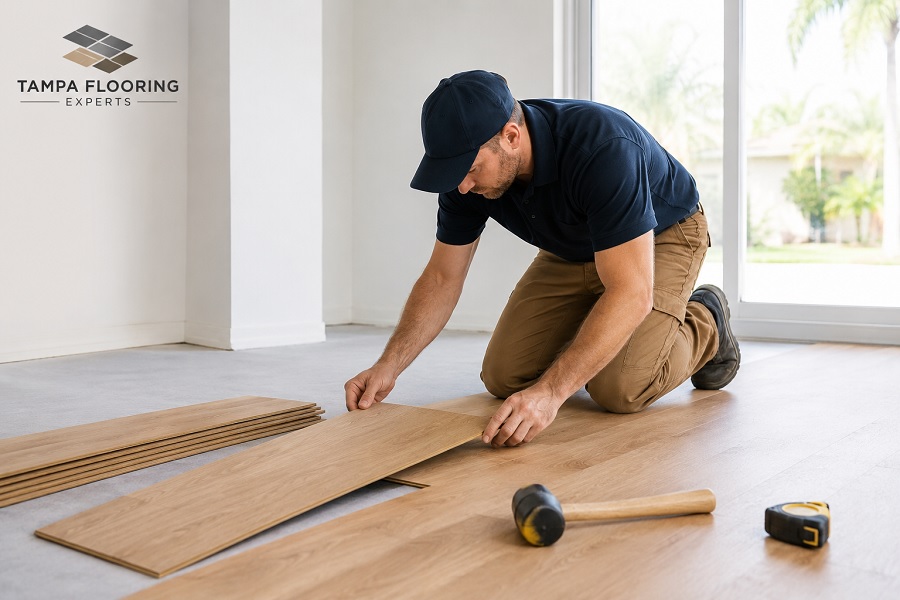
New flooring can change the entire feel of a home. It can make rooms look cleaner, brighter, newer, and more comfortable. But in Tampa homes, the final result depends on more than the flooring material itself. A good product can still fail if the slab is uneven, moisture is ignored, the old floor is not removed correctly, or the installer rushes the preparation work.
That is why hiring the right flooring contractor matters. Flooring installation is not just about placing planks, tiles, laminate, hardwood, or vinyl on top of an existing surface. It starts with understanding the condition of the home, the floor underneath, the Florida climate, and the way different materials react to moisture, movement, heat, and daily use.
Many homeowners focus first on color, style, and price. Those things are important, but they do not protect the floor from hollow spots, gaps, loose edges, cracked grout, uneven transitions, or premature failure. The real difference often comes from what happens before the flooring is installed.
For Tampa homeowners planning a flooring project, working with a professional flooring contractor in Tampa helps make sure the job is evaluated properly from the beginning. That includes checking the existing floor, identifying moisture concerns, looking for low or high spots in the slab, choosing the right installation method, and making sure the new flooring is suitable for the home’s conditions.
Tampa Floors Need More Than Basic Installation
Homes in the Tampa Bay area deal with conditions that are different from homes in colder or drier climates. Humidity is high for much of the year. Concrete slabs can hold moisture. Older homes may have uneven surfaces, previous flooring layers, patched areas, cracks, or old adhesive residue. Even newer homes can have slab imperfections that are not obvious until flooring work begins.
If these conditions are ignored, the new floor may look fine on day one but start showing problems later. Luxury vinyl plank can move or separate if the floor underneath is not flat enough. Laminate can unlock or create soft spots when installed over uneven areas. Tile can crack if the substrate is unstable or not prepared correctly. Hardwood can react to moisture if the environment is not evaluated before installation.
A contractor who understands local flooring conditions knows that Tampa homes need proper evaluation before installation starts. The floor has to be checked, not assumed. That means looking beyond the visible surface and asking what is happening underneath.
Why Floor Preparation Is So Important
Floor preparation is one of the biggest reasons flooring projects succeed or fail. A homeowner may not see the prep work once the project is finished, but the new floor depends on it every day.
If old flooring is removed poorly, thinset, adhesive, dust, or loose material can stay behind. If the slab is not flat, planks may flex when walked on. If tile is installed over a weak surface, cracks can transfer through the tile. If moisture is present and no one checks it, the flooring can be affected after the job is complete.
Proper preparation may include removal of old flooring, grinding high spots, patching low areas, cleaning the slab, checking cracks, evaluating moisture, using the correct primer, or leveling the surface where needed. The exact process depends on the material being installed and the condition of the home.
This is where experience matters. A rushed installer may try to cover problems. A careful contractor identifies them before they become expensive callbacks.
Different Flooring Materials Have Different Requirements
Not every flooring material behaves the same way. Tile, vinyl plank, laminate, hardwood, and commercial flooring all have different installation requirements.
Tile needs a stable, properly prepared surface. It does not forgive movement well. If the substrate shifts, has hollow spots, or was not prepared correctly, tile and grout can crack. Large-format tile needs even more attention because the floor must be flat enough to support the size of the tile.
Luxury vinyl plank is popular in Tampa because it is practical, attractive, and works well in many homes. But LVP still needs a flat surface. If the slab has dips, humps, or leftover debris, the planks can flex, separate, or wear unevenly.
Laminate also needs proper floor flatness. If installed over uneven areas, it can bounce, unlock, or create gaps. Many laminate problems are not caused by the laminate itself but by what was underneath it.
Hardwood and engineered wood require even more care with moisture, acclimation, and installation method. A contractor has to understand the product, the subfloor, and the environment before deciding how the floor should be installed.
The Lowest Bid Often Becomes the Most Expensive Floor
Many homeowners compare flooring estimates by looking only at the final price. While budget is important, the lowest estimate often leaves out the work that determines whether the floor will last for years or begin showing problems within months.
Some estimates include only the visible installation. Others include demolition, floor preparation, moisture testing, crack repair, transitions, underlayment, cleanup, and finishing details. Two quotes may look similar on paper while covering very different scopes of work.
Before choosing a contractor, homeowners should understand exactly what is included. Asking the right questions now can prevent unexpected costs later.
For example:
- Will the existing floor be inspected before installation?
- Is floor leveling included if needed?
- Will moisture be checked?
- What happens if hidden damage is discovered?
- Are transitions and trim included?
- Was the old flooring removed properly?
A contractor willing to explain these details usually has a structured installation process rather than simply installing flooring as quickly as possible.
Small Installation Details Make a Big Difference
Many flooring failures are caused by small details that homeowners never see.
Expansion gaps that are too small may cause laminate or LVP to buckle.
Incorrect mortar selection may reduce the lifespan of tile installations.
Skipping primer before self-leveling compounds can lead to bond failure.
Installing flooring over dust or old adhesive may reduce adhesion.
Poor transition planning can create trip hazards between rooms.
Improper layout may leave narrow pieces of flooring along highly visible walls, making an otherwise expensive floor look unbalanced.
These details rarely appear in marketing photos online, yet they often determine whether the installation still looks great five or ten years later.
On many projects around Tampa Bay, what initially appeared to be a simple flooring replacement revealed hidden problems only after demolition started. Old moisture damage, multiple flooring layers, cracked concrete, loose patches, or previous DIY repairs are more common than many homeowners expect. Addressing these issues before new flooring goes down is almost always less expensive than repairing a failed installation later.
Florida Moisture Is Always Part of the Equation
Florida’s climate creates unique challenges that homeowners in many other states never experience.
Concrete slabs naturally contain moisture. Seasonal humidity changes affect both indoor air and flooring materials. Heavy rain, high groundwater levels, and older construction methods can all contribute to conditions beneath finished floors.
A professional flooring contractor does not automatically assume moisture is a problem—but also does not assume it isn’t.
Instead, moisture conditions are evaluated as part of the installation planning process. Depending on the flooring material and slab condition, additional preparation or moisture mitigation may be recommended before installation begins.
Ignoring moisture does not always create immediate problems. In many cases, issues develop months later, after furniture has been moved back into the room and daily life has returned to normal.
Planning for moisture before installation is significantly easier than replacing damaged flooring after installation.
Communication Is Part of Professional Installation
One difference homeowners often notice is communication throughout the project.
Professional contractors explain what they find, discuss available options, outline realistic timelines, and keep homeowners informed if unexpected conditions appear after demolition.
Every home is different. Some projects proceed exactly as planned. Others require adjustments because of hidden conditions that could not be seen until work began.
Clear communication helps homeowners understand why certain recommendations are made instead of feeling surprised by changes during the project.
This approach builds trust while helping ensure the final flooring system performs as intended rather than simply looking good on installation day.
Choosing the Right Contractor Protects Your Investment
New flooring is one of the largest improvements many homeowners make, so it makes sense to think beyond the installation day. A floor should continue performing well years after the project is finished, not just look good when the crew leaves.
Choosing experienced professionals reduces the chances of avoidable repairs, unexpected movement, moisture-related problems, and costly replacement work. A contractor who takes time to inspect the existing conditions, explain the installation process, and prepare the surface correctly is investing in the long-term performance of the finished floor.
Homeowners planning a renovation can also benefit from learning about the installation process before requesting estimates. Understanding how preparation, moisture evaluation, material selection, and installation methods work together makes it easier to compare contractors based on quality instead of price alone.
If you’re planning a flooring project, working with a professional flooring contractor in Tampa can help ensure the installation starts with proper planning rather than shortcuts. From evaluating the existing slab to selecting the right installation method for Florida’s climate, experienced contractors focus on building a flooring system that performs well for years instead of simply completing the installation quickly.
Frequently Asked Questions
How long should professionally installed flooring last?
The answer depends on the flooring material, maintenance, and most importantly, the quality of the installation. Properly prepared floors generally perform much longer than installations completed over uneven or improperly prepared surfaces.
Is floor preparation always necessary?
Almost every flooring project requires some level of preparation. The amount varies depending on the condition of the existing floor, but skipping preparation is one of the leading causes of premature flooring failure.
Can uneven concrete affect new flooring?
Yes. Uneven slabs can create movement, hollow spots, cracked grout, visible lippage, joint separation, or premature wear, depending on the flooring material.
Why is moisture testing important in Florida?
Florida’s humidity and concrete slab conditions make moisture evaluation an important step for many flooring systems. Identifying moisture concerns before installation helps reduce the risk of future flooring problems.
Should homeowners choose the cheapest estimate?
Not necessarily. Comparing what is actually included in each proposal is often more valuable than comparing price alone. Proper preparation, quality materials, and experienced installation typically provide better long-term value than the lowest initial bid.
Final Thoughts
Beautiful flooring starts long before the first tile, plank, or board is installed. Careful planning, proper surface preparation, quality workmanship, and attention to Florida’s unique environmental conditions all contribute to an installation that continues looking and performing its best for many years.
For Tampa homeowners, investing in professional installation is ultimately an investment in the longevity, appearance, and value of the entire home.
