
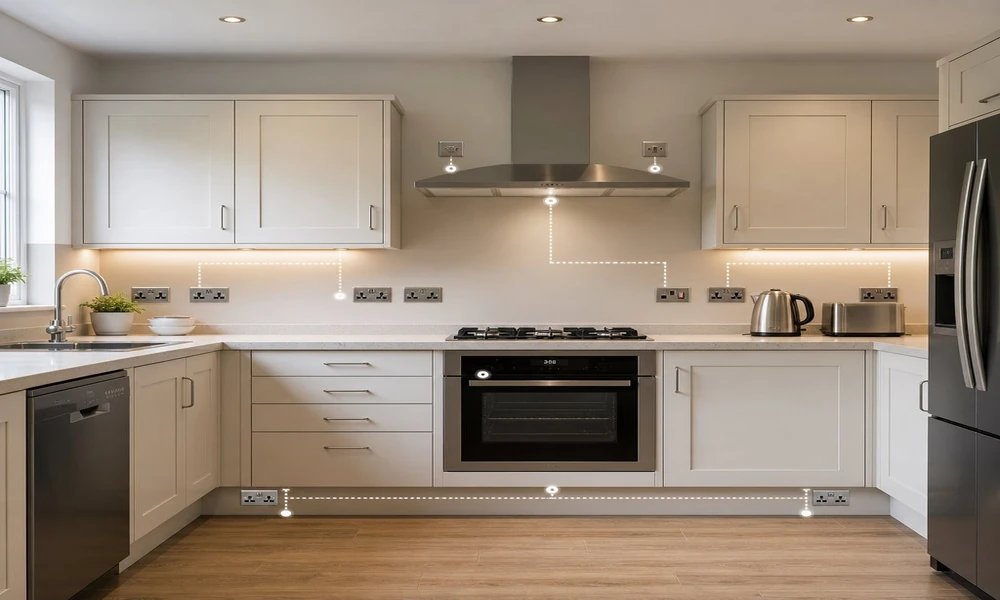
A kitchen is often the most heavily utilised area of your home, and the success of its electrical installation plays a significant role in how well you can use the space. Whether it is cooking equipment, dishwashers, lighting, rangehoods, or general appliances, a successful kitchen electrical installation will deliver convenience and safety. You need a kitchen design that accommodates open plan living, family use, warmer climates, and indoor and outdoor entertainment. This makes it even more important to plan the kitchen electrical installation at the start.
The Importance of Kitchen Electrical Installation
The kitchen uses more electricity, which is explained well at https://www.iea.org/energy-system, than many other parts of the home. It is likely that you will have multiple appliances operating simultaneously, such as a fridge, oven, kettle, toaster, microwave, dishwasher, and rangehood.
Without proper planning, your kitchen may end up with inadequate circuits, poor placement of power points, lacklustre lighting, and appliances that don’t fit where you want them to. These things are difficult to deal with after the kitchen has been built, and it can be expensive to correct. A good kitchen electrical installation plans for current use of the kitchen, and the way it may need to be used in the future. Even things like the location of your coffee machine, or how your island bench is used, can affect the design of your kitchen electrical installation.
Positioning Power Points Where You Need Them
Placement of power points should be determined by how you actually use your kitchen, rather than just wherever there is available space. Your benchtop appliances require access to power points, but they need to be in safe locations away from sinks, cooktops, and wet areas. You might want power points for following:
- Food preparation
- Appliance cupboards
- Island benches
- Fridge
- Pantry
- Charging phones and tablets
For many kitchens, there is easy access to the dining area or outdoor entertainment space. Having extra power near the island bench or serving bench can provide more flexibility for dining, working from home, and entertaining.
Dedicated Circuits for Major Appliances
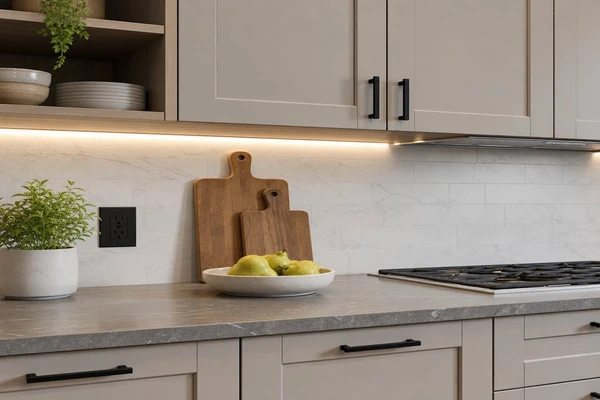
Your major kitchen appliances may require dedicated circuits. This can include the oven, cooktop, dishwasher, and some rangehoods. Your fridge may also require some special considerations, especially if you change the layout of the kitchen.
Induction cooktops are becoming more popular, but they can require more power than the appliances they replace. If you are switching from gas cooking to induction, or changing out an older electric cooktop, your existing wiring might not be sufficient. Planning ahead allows you to check with manufacturers about your appliances, and you’ll avoid any unpleasant surprises later. It will also allow your kitchen design, cabinetry, and electrical installation to work together seamlessly.
Lighting to Accommodate Practical Needs
Lighting should be planned with functionality in mind. Not only does lighting make the kitchen look good, but it also needs to accommodate cooking, preparing food, cleaning, and entertaining. Some components of a practical lighting plan include the following:
- General lighting for the whole room
- Task lighting over benches, sinks, and cooktops
- Feature lighting for islands, shelves, or dining areas
In many homes, natural light is already a strong feature of the kitchen, but evening use still requires planning. Poor lighting leaves shadows over preparation areas, particularly in open-plan kitchens where lighting is shared between the kitchen and living space.
Under-cabinet lighting, pendant lights, and strategically placed ceiling lights can all add function when considered alongside the kitchen layout.
Safety Around Water, Heat, and High Use
Safety is a key focus in any kitchen electrical installation. Electricity must be managed carefully around water, heat, steam, and high-demand appliances.
Power points and switches should be located at safe distances from sinks and cooking areas. Wiring should be kept away from heat sources such as ovens and cooktops. Appropriate safety devices are a must in a high-use kitchen.
Ventilation is also important. Rangehoods and exhaust fans require appropriate electrical connections, and their location should be coordinated with cabinetry and ducting. Good ventilation (as you can see here) also reduces humidity and improves comfort, which is especially important.
Updating an Older Kitchen
Many older homes were constructed before today’s heavy-appliance kitchens were standard. Kitchens in these homes may have insufficient power points, outdated wiring, or old switchboards that require assessment before any kitchen renovations take place.
This is especially relevant if you are altering the layout, adding an island bench, increasing the number of appliances, or switching from gas to electric cooktop. After old cabinets are removed, old wiring or past electrical modifications may also be exposed.
Assessing the electrical system before renovation can avoid delays and help your project proceed more smoothly.
Typical Electrical Planning Errors
Electrical decisions are sometimes deferred until later in a kitchen project. This is problematic when cabinetry has already been ordered, appliances have been chosen, or walls have been sealed.
Some common errors include:
These issues are far easier to resolve before the installation starts. Good planning at the outset creates flexibility and ensures the finished kitchen will feel like a natural part of everyday life.
Designing a Kitchen for Daily Life
A kitchen electrical installation involves more than simply plugging in appliances. It shapes the way the kitchen feels, operates, and supports the lives of those who use it every day. For homeowners, a well thought-out electrical plan can help your kitchen renovation or new build be safer, more practical, and more pleasurable.
With attention given to power points, lighting, appliance needs, safety, and future growth right from the beginning, you can end up with a kitchen that is prepared for hurried mornings, leisurely evenings, and everything in between.
