
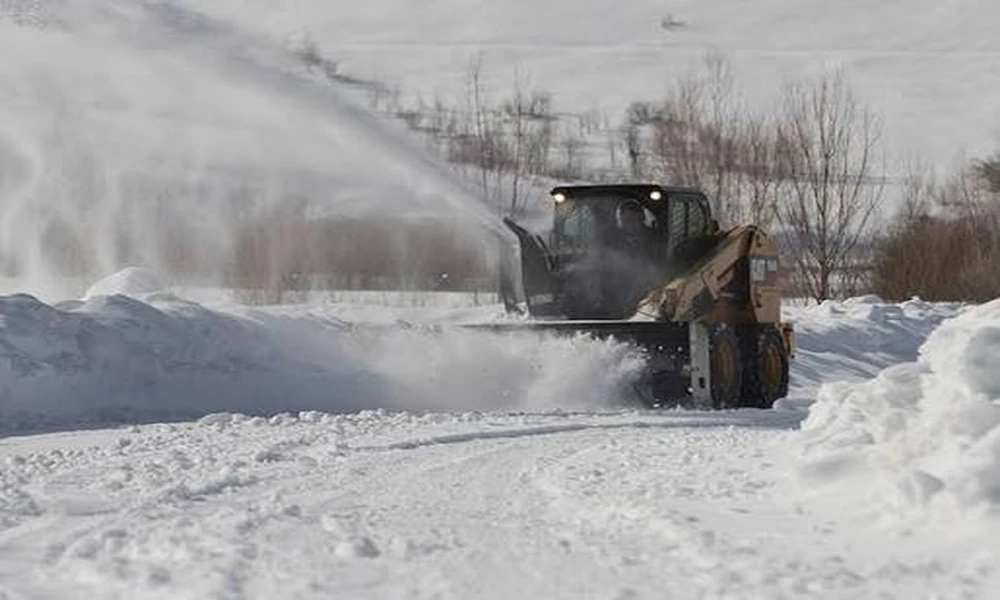
Anyone who has lived through a few Calgary winters knows the pattern. A storm drops fresh snow overnight, the driveway gets cleared in the morning, and by the next afternoon a warm wind has pushed the temperature well above freezing and turned every edge of the remaining snowbank into running water. Then the sun goes down, the cold returns, and that water spreads across the walk and freezes into a thin, glassy layer that is far harder to deal with than the snow ever was. Chinooks are one of the things Calgarians like most about winter, but they change what a sensible snow plan needs to cover.
What a Chinook Does to Pavement
A chinook is a warm, dry wind that comes down the eastern slopes of the Rockies, and in Calgary it can lift the temperature by twenty degrees or more in a matter of hours. The City of Calgary’s own climate reporting puts the average at about 46 chinook days a year, along with roughly 128 freeze-thaw cycles a year over the past three decades. Those numbers explain a lot. Snow in Calgary rarely just sits there until spring, because it melts, moves and refreezes many times over a single season.
The trouble is where that meltwater goes. Snowbanks piled beside a driveway or at the top of a sloped walk melt from the sunny side first, and the water runs downhill across concrete that is still cold from the night before. It freezes in the low spots, along the edge of the garage apron and on the front steps, which are exactly the places people walk without looking. The City notes that sidewalk ice builds up easily with Calgary’s frequent freeze-thaw cycles, and anyone who has stepped out to fetch the recycling bin in February will agree.
Why Plowing Alone Falls Short Here
Clearing snow quickly is still the most important part of any Calgary winter plan, since a thin layer of fresh snow is much easier to remove than snow that has been walked on, driven over and partly melted. A service that comes out for light snowfalls, rather than waiting for a deep accumulation, prevents a lot of the packed layer that later turns to ice. That is why it is worth comparing options for snow clearing for Calgary homes with an ice-melt option instead of looking only at how deep the snow must get before anyone arrives.
Even a perfectly cleared driveway can ice over, though, because the hazard usually forms after the crew has gone. Meltwater from a nearby snowbank, a dripping downspout or the roof overhang can glaze a clean surface in a single evening. A plan built only around pushing snow will look excellent the morning after a storm and still leave a slick patch by the weekend, which is why ice control deserves its own line in your winter thinking.
Ice melt during each visit
The most practical way to handle routine ice is to have a melting product applied every time the snow is cleared, so that any thin film left behind does not bond to the concrete overnight. Many residential services offer this as an add-on, and it is worth asking how it works before you book. For example, with a flat-rate Calgary driveway and sidewalk service you can usually choose which areas are cleared and whether ice melt goes down during each snowfall visit, but ice that builds up between snowfalls is a different matter and is typically arranged and billed separately.
Choosing the Right Product for the Temperature
Ordinary rock salt is the cheapest de-icer and works well on a mild chinook evening, but it slows down sharply as the pavement gets colder. Guidance from the Minnesota Pollution Control Agency puts its practical lower limit at around minus nine degrees Celsius, while calcium chloride keeps working to about minus 29. Calgary’s own road crews switch to a sand and salt mix, sometimes called pickle, when road surfaces are cold and expected to get colder, because the sand adds grip even when the salt has stopped doing much.
For a home, that suggests a simple approach. Keep a bag of a colder-rated melter for the deep cold snaps, use it sparingly, and keep some traction grit for the days when nothing will melt. The City also offers free sand and salt at sandbox locations around town for residents who bring their own container, which is handy for topping up a bucket by the front door. Whatever you use, sweep up the excess once the walk is dry so it does not track indoors or wash into the lawn edges.
Protecting concrete and landscaping
Freeze-thaw cycles are hard on concrete as well as on people. Water that seeps into small cracks expands when it freezes, and over a few winters that can lead to flaking and pitting on driveways and steps. Applying only as much melter as the conditions require, clearing slush before it refreezes and keeping meltwater moving away from the surface all help, as does a sealer on newer concrete if the installer recommends one.
Fixing the Drainage That Feeds the Ice
The cheapest ice control is often stopping water from reaching the walk in the first place. Look at where the ice keeps forming and trace it uphill, because the source is usually a downspout outlet emptying across the path, a snowbank piled on the wrong side of the driveway or a sagging section of walk that collects water. Extending a downspout, moving the snow pile to the low side of the property or asking your crew to stack snow away from the steps can remove a recurring icy patch for the whole season.
Fall is the right time to look at this, while the ground is visible and you can see how water moves after a rain. Note any low spots on the driveway, check that downspouts point toward the lawn and not across a walkway, and decide where snow should be piled before the first storm makes that decision for you. Combined with prompt clearing and ice melt applied during each visit, those small changes make a Calgary winter far more manageable, chinooks included.
Contact “PROPERTY WERKS” For More Information:
Address
Phone
(403) 239-1269
Hours of operation
Weekdays 9 a.m. to 5 p.m.
