
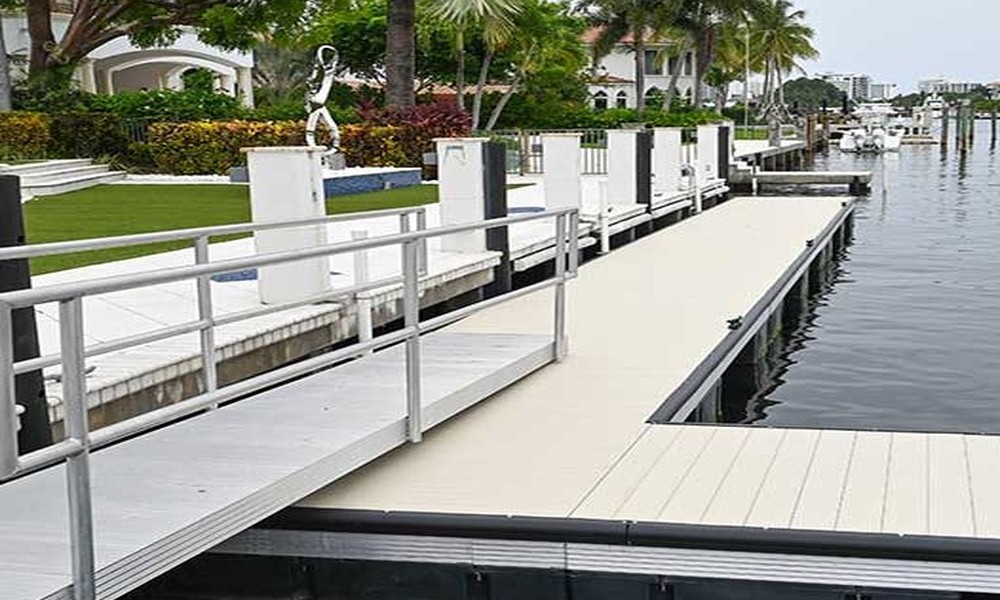
A floating boat dock can be a great addition to a waterfront property. It gives you easier access to the water, creates a safer place to board your boat, and adjusts naturally as water levels rise or fall.
The good thing is, installing a floating dock is often more straightforward than building a fixed dock. Many floating dock systems come in modular sections, so the setup can be handled step by step. Still, proper planning matters. A dock that is poorly placed or weakly anchored can shift, become unstable, or wear down faster than expected.
Here is a simple five-step guide to help you understand how floating boat dock installation usually works.
Step 1: Choose the Best Location
Before you start assembling anything, take time to study the shoreline and water conditions. The location you choose will affect how safe, stable, and useful your dock will be.
Look for an area with:
- A stable shoreline that is easy to reach
- Enough water depth for your boat
- Lower exposure to strong waves or heavy currents
- Safe access from land to dock
- Enough space for docking, turning, and loading
Water depth is especially important. The dock should sit in a place where your boat can float safely without hitting the bottom. If the water is too shallow, your boat may scrape, especially during low water periods.
You should also check local rules before installation. Some areas require permits or have guidelines about dock size, placement, shoreline protection, and environmental impact. It is better to confirm this early instead of dealing with problems after the dock is already installed.
Step 2: Assemble the Dock Sections
If you are using a modular floating dock, lay out all sections, hardware, floats, brackets, pins, and connectors before assembly. This helps you see what you have and avoid missing parts halfway through the job.
Follow the dock system instructions carefully. Most modular docks connect through brackets, pins, bolts, or hinge-style hardware. Make sure each section is aligned properly before tightening everything.
As you assemble the dock, check that:
- Dock sections are level
- Floats are attached securely
- Brackets and pins are properly locked
- Decking feels firm
- No hardware is loose or missing
It is usually easier to make corrections on land than after the dock is floating in the water. So take your time during this step. A solid assembly will make the rest of the installation smoother.
Step 3: Move and Launch the Dock
Once the dock sections are assembled, the next step is moving the dock into the water. Smaller docks may be moved by hand with enough help. Larger docks may need equipment, a boat, a winch, or other support.
Be careful during this stage. Floating dock sections can be heavy and awkward to move. Avoid dragging parts across sharp rocks or rough surfaces that could damage the floats or frame.
As the dock enters the water, watch how it floats. It should sit level and balanced. If one side sits lower than the other, check the float placement, weight distribution, or connections before moving forward.
Guide the dock slowly toward its planned position. Do not rush this part. It is better to adjust gradually than to force the dock into place.
Step 4: Secure the Dock with the Right Anchoring System
A floating dock needs a strong anchoring system to keep it in position. Even though the dock is meant to move up and down with water levels, it should not drift, twist, or swing too much.
Common anchoring options include:
- Concrete block anchors for calmer water and moderate conditions
- Pile anchors or guide poles for deeper water or stronger movement
- Cable anchoring systems for flexible positioning
- Auger anchors for certain bottom conditions
- Shoreline attachments when the dock connects directly to land
The right anchor depends on your water depth, bottom type, current, wind exposure, and dock size. A quiet lake may need a simpler setup. A tidal area or busy waterway may need stronger anchoring.
When securing the dock, allow enough slack for normal movement. The dock should rise and fall with the water. But it should not move so much that it becomes hard to use or unsafe for boats.
Step 5: Inspect and Make Final Adjustments
After the dock is anchored, inspect everything before regular use. Walk slowly across the dock and check how it feels. It should feel stable, balanced, and secure.
Look closely at:
- Anchor lines or cables
- Connection points
- Fasteners and brackets
- Float placement
- Dock height
- Shoreline access
- Boat clearance
- Any uneven movement
If the dock pulls too hard in one direction, adjust the anchor lines. If it feels too loose, tighten or reposition the anchoring system. If one section feels unstable, check the float support and hardware.
It is also smart to test the dock with the boat. Approach slowly, tie off carefully, and see how the dock responds. This helps you spot small issues before they become bigger problems.
Final Thoughts
Installing a floating boat dock can be a manageable project when you take it one step at a time. Start with the right location, assemble the sections carefully, launch the dock safely, use a reliable anchoring system, and inspect everything before regular use.
A floating dock should feel safe, steady, and easy to access. It should also have enough flexibility to move with changing water levels without drifting out of place.
With good planning and proper installation, a floating boat dock can give your waterfront property more function, comfort, and long-term value.
This post was written by a professional at Supreme Marine Floating Docks. Supreme Marine Floating Docks is dedicated to providing top-quality floating dock Miami and marine accessories that combine durability, innovation, and superior performance. While we are a new brand, our team brings over 50 years of combined industry experience, making us a trusted name in the marine world. We are passionate about designing and delivering products that meet the highest standards, ensuring reliability and longevity in all marine environments. Whether for residential, commercial, or recreational use, our docks are crafted with precision and care, setting a new benchmark in the industry. At Supreme Marine, we don’t just build docks-we create lasting solutions.
