
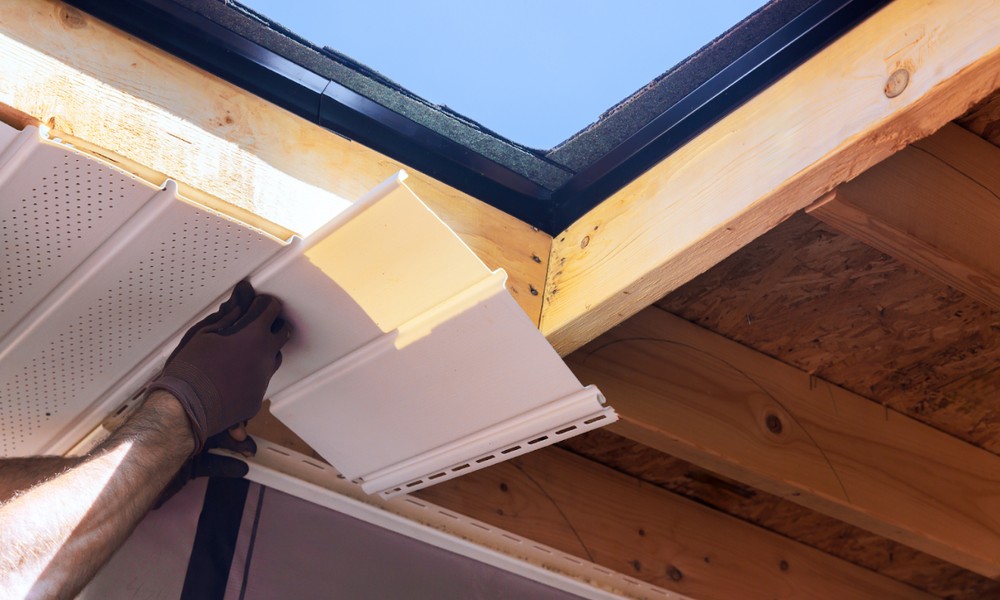
Replacing gutters can feel like the obvious solution when you’re seeing overflow, dripping corners, peeling paint, or water damage near the roofline. And new gutters can make a big difference-especially if the old system is undersized, sagging, or constantly clogged.
But here’s the catch: gutters are only as good as what they’re attached to.
If the “roof edge” (the area where your shingles, drip edge, flashing, fascia, and gutter system all meet) has underlying damage, installing brand-new gutters may not solve the real problem. In some cases, it can even hide it for a while-until bigger repairs show up later.
Below are eight common reasons new gutters won’t fix roof edge issues without fascia work, and what professionals look for before they hang a single new section.
Gutters need solid wood to fasten into
The issue: Modern gutter systems rely on hidden hangers and fasteners that screw into the fascia. If the fascia board is soft, cracked, warped, or rotted, those fasteners can’t hold properly.
What happens next: Your new gutters can start sagging, pulling away, or developing low spots-sometimes within a season-because the mounting surface is failing.
The fix: Pros evaluate the fascia for strength before install and replace compromised sections so the gutter attachment is secure and long-lasting.
Fascia rot often starts behind the gutter
The issue: Many fascia problems begin out of sight-behind the old gutter line. Years of overflow, clogged sections, or water running behind the gutter can slowly soak the fascia.
What happens next: You install new gutters, but the hidden rot remains. Fasteners may bite at first, but the board continues degrading, especially during wet seasons.
The fix: A proper inspection involves pulling back problem areas and checking for soft spots, delamination, or long-term moisture damage-then addressing it before new gutters go up.
Water can still run behind gutters if the roof edge isn’t integrated correctly
The issue: Gutters don’t “catch” water by themselves. They work as part of a roof-edge system that includes shingles, drip edge, and flashing. If the drip edge is missing, bent, or improperly placed, water can sneak behind the gutter and soak the fascia.
What happens next: Even new gutters may show “behind-the-gutter” dripping, fascia staining, or peeling paint.
The fix: Pros make sure the drip edge and flashing direct water into the gutter, not behind it-especially at corners and roof valleys.
Uneven fascia causes poor pitch and standing water
The issue: Gutters need a consistent slope toward downspouts. If fascia boards are warped or bowed, the gutter line can become uneven even if the installer “follows the board.”
What happens next: Standing water forms in low spots. That leads to sediment buildup, mosquitoes, winter ice expansion, and premature corrosion or seam failure.
The fix: Repairing or replacing warped fascia gives installers a straight line to work with-making correct pitch possible across the entire run.
Roof edge leaks can masquerade as “bad gutters”
The issue: Homeowners often blame gutters for water marks on soffits, fascia, or siding. But roof edge leaks-like damaged shingles at the eave, failing flashing, or drip edge gaps-can also send water where it shouldn’t go.
What happens next: You replace gutters and still see staining or dampness, because the actual leak path is above the gutter.
The fix: Pros inspect the full roof edge zone. If fascia is already compromised, it’s often a sign that water has been traveling the wrong path for a while.
Pests exploit weak fascia-and gutters won’t stop them
The issue: Soft fascia invites carpenter ants, termites, birds, squirrels, and other pests looking for an entry point along the roofline. Gutters don’t solve that structural vulnerability.
What happens next: New gutters may cover the problem temporarily, but pests continue using gaps and soft spots to expand damage behind the scenes.
The fix: Replacing damaged fascia closes off access points and restores the barrier at the roof edge-especially when paired with proper sealing and flashing.
Paint failure and “bubbling” indicates moisture in the board
The issue: Bubbling paint, dark streaks, and flaking along the roof edge often means moisture is trapped in or behind the fascia. That moisture doesn’t disappear because new gutters are installed.
What happens next: You might get a cleaner look for a short time, but the fascia continues to break down from the inside out.
The fix: Professionals remove the damaged sections, address the moisture source, and complete fascia board repair so the roof edge can actually dry out and stay protected.
Old damage can spread to soffits and rafter tails
The issue: Fascia boards protect the ends of roof rafters (rafter tails) and the soffit area. When fascia stays wet or rots, the damage can migrate into deeper structural components.
What happens next: A “simple gutter replacement” can turn into a larger repair later-soffit replacement, rafter tail repairs, repainting, and more-because the underlying wood stayed compromised.
The fix: Fixing fascia early is a form of damage containment. It keeps the repair limited to the edge instead of spreading into structural wood.
New gutters are an upgrade, but fascia is the foundation
If you’re investing in new gutters, you want the system to last. That means making sure the surface it’s mounted to is strong, straight, and dry. When fascia is damaged, gutters can’t perform the way they should-because the roof edge system is already failing.
A pro assessment can tell you whether you need minor fascia fixes in a few sections or replacement along an entire run. Either way, addressing the fascia first (or at the same time) is what turns “new gutters” into a real solution-rather than a temporary patch over a deeper roofline problem.

Femke Denis is a technology writer specializing in smart home innovation, automation systems, and connected devices. She focuses on how emerging technologies are transforming modern homes into more efficient, secure, and intelligent living spaces.
