
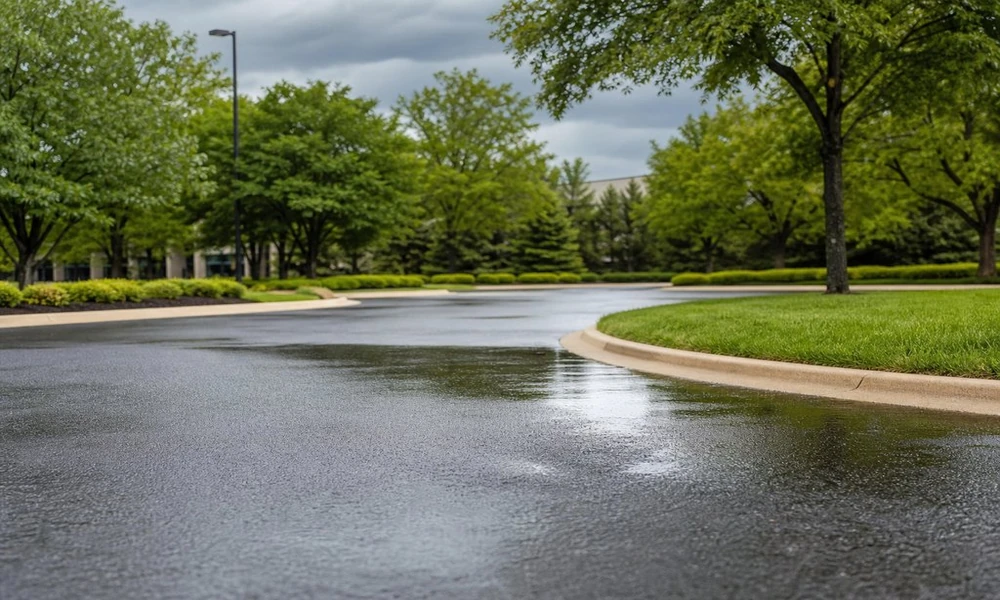
Sometimes a driveway or parking lot looks fine in the spring but then looks very different after a long period of heavy rain. You’ll notice water collecting in some cracks close to the driveway entrance, you’ll see some spalling around the curb adjacent to a landscaped island, and your parking lines may be nearly invisible after a long day of rain. These issues might not necessarily mean your asphalt surface needs to be replaced, but they are certainly things to consider prior to the water finding its way down into the subgrade.
For homeowners, HOA members, and commercial property owners, the aim is generally simple: tackle the minor issues while they’re minor.
Water and Drainage
Often, standing water will tell you exactly what’s going on. Water has to flow off of asphalt – see https://eapa.org/what-is-asphalt/ to know more; if it doesn’t flow properly, it can accumulate in a low spot, at the edge of the curb, or around the driveway. From there, water can work its way into cracks and deteriorate the base material.
The first step is to check the pavement after the rain stops. If you notice water pooling or lingering for two days after rainfall, make a mental note of the locations. Does it pool in the same spot even after a minor rain event? In a commercial setting, this might be in front of a storm drain or at the end of a travel lane. In a residential environment, this might happen at the transition between the driveway and garage apron or at the edge of the road.
Fixing the water pooling might entail clearing a clogged drain, fixing a depression, filling a crack, or replacing a deteriorated section. If you only address the water on top and not the root cause, the problem could persist.
Crack Patterns
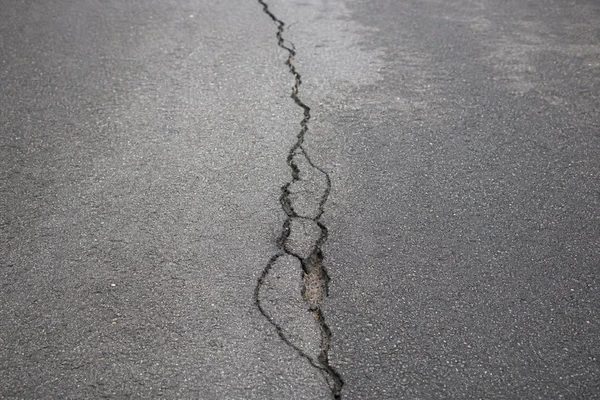
It’s important to know that not all types of surface damage require the same solution. Hairline cracks are generally addressed with crack sealing, but larger cracks or areas where you feel movement when driving over them might indicate a more substantial structural problem.
Another area that often needs attention is the outer edge of asphalt pavements. Areas like HOA roads and long driveways are prone to damage at the edges due to cars riding up on the edges and driving on the grass. If one area of edge begins to fail, rain will accelerate the deterioration of the edge as well.
If you’ve just had new asphalt installed, the driveway or parking lot drains correctly, and there’s no cracking or edge failure, there isn’t much need for concern. If you haven’t had new asphalt installed recently, having an annual inspection done can keep you from having to deal with large areas of repaving.
Pavement Markings
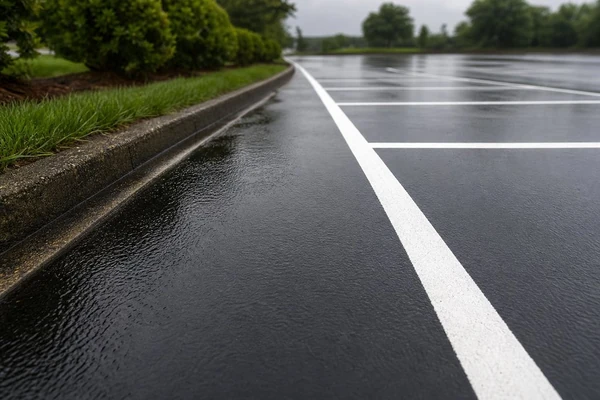
Parking stalls, directional arrows, and other markings often don’t seem like a big deal until they begin to fade, making them difficult to discern in certain weather conditions. After rainfall, these markings can become nearly impossible to see. On a busy shopping center lot, this means poor use of space and potential for conflict between vehicles and traffic lanes. On an HOA driveway, it means the location of fire lanes and visitor parking might not be clear.
The best time to apply new paint is after any other issues with the asphalt have been corrected. Restriping a pavement that needs crack filling or patching is not a good use of money. Ideally, any other repairs should be made first:
Water will always find the weakest spot.
Repair or Replacement
The goal of a maintenance program is to identify what can be repaired and what must be replaced. This is where the expertise of Blacktop By Beede Paving can help. If the pavement is solid and only has minor cracking, sealcoating might be all that’s needed to extend the life of the asphalt. If the pavement is deteriorating in multiple areas or standing water is an issue, it might need to be removed and replaced before being coated.
Property owners should make note of changes to the driveway or parking lot over the course of the year. Photographing the same area before and after a significant rain event can help you determine whether an issue is worsening or staying static. Homeowners can take pictures of their driveways around gutters and culverts or at the ends of driveways where cars tend to turn sharply.
Pre-Storm Inspection
Prior to any period of heavy rain, it’s a good idea to look at your asphalt when it’s dry and when it’s wet. Check for any locations that collect water, any cracks that aren’t filled, any areas of edge failure, and any areas where striping is barely visible. Call out these specific areas for repair.
