
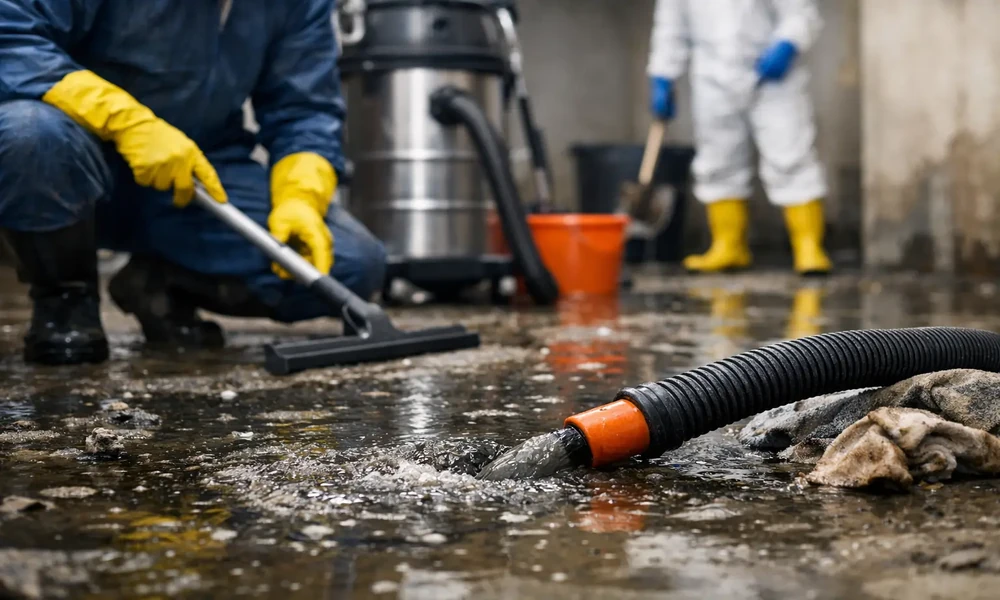
The sound usually comes first. It might be a low gurgle from the floor drain during a hard August downpour, or a toilet that won’t drain the morning after a family gathering. Within minutes, gray water with an unmistakable smell starts spreading across the basement floor, and a routine wet basement becomes something far more serious. In Lancaster County, century-old rowhouses in the city sit a short drive from farmhouses on private septic systems, so sewage backups arrive in more ways than most homeowners expect.
Handling one well starts with accepting that sewage is not ordinary water damage. Owner Darlene Eager has spent 17 years in restoration, and her family-run crew at DC Eager Emergency Services in Willow Street responds day or night across Lancaster County. They typically reach a home within hours and offer a free assessment that explains the work before any estimate is given. That approach suits sewage jobs especially well, because the choices made during the first day decide how healthy the house will be for years.
Three Doorways Sewage Uses to Get Inside
Where the water entered tells you who is responsible for the fix and what kind of cleanup lies ahead.
Up Through the Floor Drain
Older neighborhoods in Lancaster city were built with combined sewers, which carry stormwater and household wastewater in the same pipes. During intense storms these lines can fill faster than they empty. The pressure then pushes water back toward the lowest opening it can find, which is often a basement floor drain. Homes in areas with separate systems can see the same thing when stormwater gets into sanitary lines through cracked pipes or sump pumps improperly tied into the sewer.
Out of the Lowest Fixture
When only one house on the street has a problem, the cause is usually the private lateral, the pipe running from the foundation to the public main. Tree roots work into the joints of old clay pipe, flushable wipes snag on those roots, and kitchen grease hardens around the whole tangle. Wastewater from upstairs fixtures then comes out at the lowest point, typically a basement toilet, shower, or laundry tub. In most local systems the homeowner is responsible for the service line between the house and the public right of way, so the repair bill lands on the household.
Back From a Saturated Septic System
Out in the townships, many homes rely on a septic tank and drainfield. After days of steady rain, a soaked drainfield can’t absorb effluent, and the tank has nowhere to send it except back toward the house. Nebraska Extension’s guide to managing septic systems during floods covers what to do. Block the lower-level drains in the house to limit backups, and stop using the system until the soil dries out, which can take several weeks. It also warns against pumping an unanchored tank while the ground is still saturated, since an empty tank can float out of the soil or collapse.
What the First Hour Should Look Like
Panic tends to produce mopping, and mopping spreads contamination. A calmer sequence protects both the people and the house.
- Stop using water anywhere in the home. Every flush, shower, or load of laundry adds to the backup.
- Keep children, pets, and anyone with a weakened immune system away from the affected area.
- Turn off power to the basement at the panel only if you can reach it without stepping into water. If you can’t, leave that to the utility or a professional.
- Shut down the furnace or air handler if it pulls return air from the basement, so contaminated moisture doesn’t move through the ductwork.
- Photograph the water line, damaged belongings, and the drain or fixture where the water appeared before anything gets moved.
- Call a plumber to clear the blockage and a restoration company to handle the cleanup. One fixes the cause and the other fixes the damage.
If you have to step into the area, wear rubber boots and heavy gloves, and wash thoroughly afterward. Any cut or scrape that touched the water deserves attention from a doctor.
Why Sewage Plays by Stricter Rules
Restoration professionals classify water by how contaminated it is. Clean water from a burst supply line is Category 1. Sewage is Category 3, the highest level in the IICRC S500 standard, because it can carry bacteria such as E. coli and Salmonella, viruses including hepatitis A, and parasites like Giardia. That classification changes what can be saved.
Hard, nonporous surfaces such as concrete floors, ceramic tile, metal shelving, and glass can usually be cleaned and disinfected. Porous materials are a different story. Carpet and pad, drywall, fiberglass insulation, upholstered furniture, mattresses, and particleboard cabinets absorb contaminated water deep into their structure, where surface scrubbing can’t reach it. These items are typically removed and bagged. On finished walls, crews make a flood cut, removing drywall a foot or two above the highest wicking line so the wall cavity behind it can be cleaned and dried.
Sentimental items sit in a gray zone. Photographs can sometimes be rinsed and frozen until a conservator can help, and hard plastic toys can be disinfected. Stuffed animals and fabric keepsakes rarely come back safely. It helps to decide early, because waiting gives bacteria and mold time to settle in.
Old Stone and Old Wood Need Patience
Lancaster County’s housing stock adds its own complications. Many older homes sit on fieldstone or limestone foundations laid with lime mortar, which absorbs water and holds it far longer than a poured wall does. Exposed joists and subfloors above an unfinished basement soak up humidity from a flooded floor even when the water never touches them. In rowhouses, plaster walls on upper floors can hide damp lath if water traveled up through a plumbing chase.
These materials can usually be saved, but they can’t be rushed. Stone is cleaned with a disinfectant and then dried slowly with dehumidifiers and steady airflow, which protects the mortar and keeps mineral salts from blooming across the surface. Wood framing is cleaned, treated, and monitored until its moisture content returns to a normal level for the season.
Dry Means the Meter Agrees
A basement can feel dry to the touch while the framing and stone are still holding water. Professional crews track readings daily with moisture meters, thermal cameras, and hygrometers, and they compare wet areas against an unaffected room in the same house. Drying is finished when those numbers match, not when the fans have run for a set number of days.
Odor is another honest indicator. A lingering sewer smell after cleanup usually means contaminated material was missed. Common hiding spots are under a wall’s bottom plate, behind a cabinet base, or in the gap between a stair stringer and the wall. Some families also choose independent testing after the cleanup for extra peace of mind, especially with infants or elderly relatives in the home.
The Policy Clause That Catches People Off Guard
Many homeowners learn about the sewer backup exclusion only after filing a claim. Standard homeowners policies often exclude water that backs up through drains or sewers unless a separate water backup endorsement was purchased. Those endorsements usually carry their own coverage limit, and flood policies have their own conditions. Reading your declarations page before storm season takes ten minutes and can spare you a painful surprise.
If you do have coverage, documentation carries the claim. Keep the photos, the plumber’s invoice naming the cause, a list of discarded items, and the drying logs from the restoration crew. Adjusters rely on that paper trail to approve removing materials that might otherwise look salvageable.
Keeping the Next Backup Outside
Prevention depends on which doorway the water used. Homes that flood from the public sewer side benefit most from a backwater valve, a one-way flap on the main sewer line that closes when water tries to flow in reverse. It needs a plumber and often a permit, and the flap needs occasional cleaning to keep working.
For lateral problems, a camera inspection reveals roots, sags, and cracked joints before they cause the next overflow. A cleanout near the foundation gives plumbers easy access when trouble starts. Keeping wipes, grease, and paper towels out of the drains removes much of the debris that turns a small root intrusion into a full blockage. Septic owners protect themselves by pumping the tank every three to five years, pointing downspouts away from the drainfield, and easing off water use during long stretches of rain.
None of these steps makes a house immune, but each one lowers the odds. Combined with a clear plan for the first hour, they turn a sewage backup from a disaster that lingers for months into a stressful week the house fully recovers from.
