
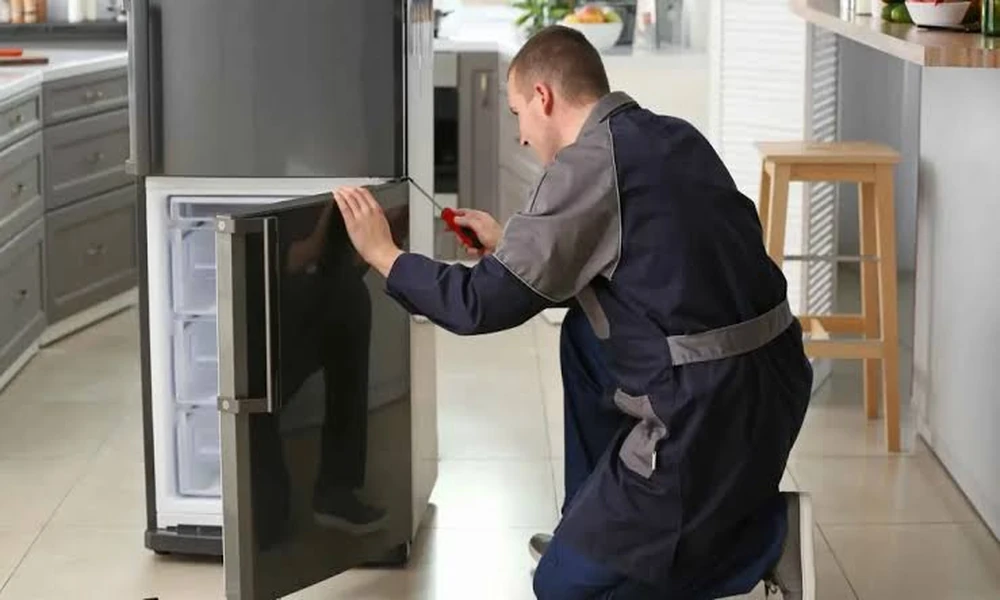
A refrigerator is the only appliance in a home that runs continuously for its entire life, and in this climate it works harder than it would almost anywhere else. It is also the one whose failure has the most immediate consequence, since a compartment that drifts above safe temperature spoils food before anyone notices the change. Understanding the common causes behind refrigerator fridge repair calls helps owners act on the early symptoms rather than the final one.
Not Cooling Enough, but Still Running
The most frequent complaint. Before assuming a major fault, check the simple causes, a door not sealing because of a perished gasket or an obstruction, vents inside the compartment blocked by packed food, a thermostat knocked to a warmer setting, or condenser coils at the back or beneath so coated in dust that heat cannot escape. In this climate, dust and humidity make coil fouling a genuinely common cause, and cleaning them is a maintenance task rather than a repair.
Running Constantly Without Reaching Temperature
A compressor that never cycles off is working against something. Common causes are a refrigerant leak, a failed condenser fan, an evaporator coil iced over because the defrost system has failed, or a door seal that lets warm humid air in continuously. Ice build-up on the evaporator is particularly common here, since humid air entering each time a door opens condenses and freezes. A technician will usually distinguish these quickly, and the outcomes range from a modest part to a decision about the appliance’s future.
Ice Forming Where It Should Not
Frost accumulating on the rear wall of a compartment, or a sheet of ice under the freezer drawer, generally points to the defrost system, a failed defrost heater, thermostat or timer, or a blocked defrost drain allowing meltwater to refreeze. A blocked drain is also the usual explanation for water pooling under the crisper drawers, and clearing it is a straightforward job. Left alone, ice build-up restricts airflow and gradually makes the whole appliance less effective.
Water Leaking Onto the Floor
Three usual causes. A blocked defrost drain overflowing internally and running out. A cracked or displaced drain pan beneath the appliance. Or, on models with a water dispenser or ice maker, a leaking supply connection. Water around a refrigerator is worth attending to promptly, both because the appliance is electrical and because a slow leak under a kitchen unit damages cabinetry and flooring long before anyone sees the water itself.
Unusual Noises
Refrigerators are not silent, and knowing which sounds are normal helps. Occasional gurgling and clicking is refrigerant and thermostat operation. A rhythmic buzzing or humming that has become louder often indicates the condenser or evaporator fan, sometimes simply because dust has unbalanced the blade. A loud knocking or a compressor that starts with a struggle is more serious. A noise that has changed recently is worth reporting even if the appliance still cools, because it is the earliest warning available. Providers of refrigerator repair services will usually ask you to describe the sound and when it occurs.
The Compressor Question
Compressor failure is the outcome owners fear, and it is the one where the arithmetic usually favours replacement. The part and the labour to recover refrigerant, replace the unit and recharge the system are substantial, and on an appliance well into its service life the cost approaches a new refrigerator with better efficiency. On a relatively new appliance, particularly one still within a manufacturer’s sealed system warranty, repair is the clear answer. Check the warranty before assuming otherwise.
Repair or Replace
Weigh three things, age against typical service life, repair cost against replacement, and whether this is the first fault or another in a series. A rule of thumb is that a repair exceeding roughly half the cost of a comparable new appliance, on an older unit, is not worth doing. Factor in efficiency, since a refrigerator running continuously for a decade costs meaningfully more to operate than a current model, and that difference accumulates every month.
Preventive Habits That Genuinely Help
Clean the condenser coils a couple of times a year. Leave clearance at the back and sides so heat can escape. Check and clean the door gasket, and test the seal by closing the door on a sheet of paper and feeling the resistance as you pull it out. Do not overfill compartments to the point where internal vents are blocked. Let hot food cool before refrigerating it. None of this is demanding and all of it reduces the load on the components that fail.
Getting the Best Out of a Service Visit
Note the brand, model and age from the rating plate, describe exactly what the appliance is and is not doing, note any error code, and mention what changed recently. Ask about the diagnostic fee, whether it is waived on proceeding, whether parts are genuine, and what warranty covers the repair. Handled early, a refrigerator fridge repair is usually a fan, a gasket, a drain or a defrost component, and those are all inexpensive compared with what happens if the symptom is ignored for six months.
