
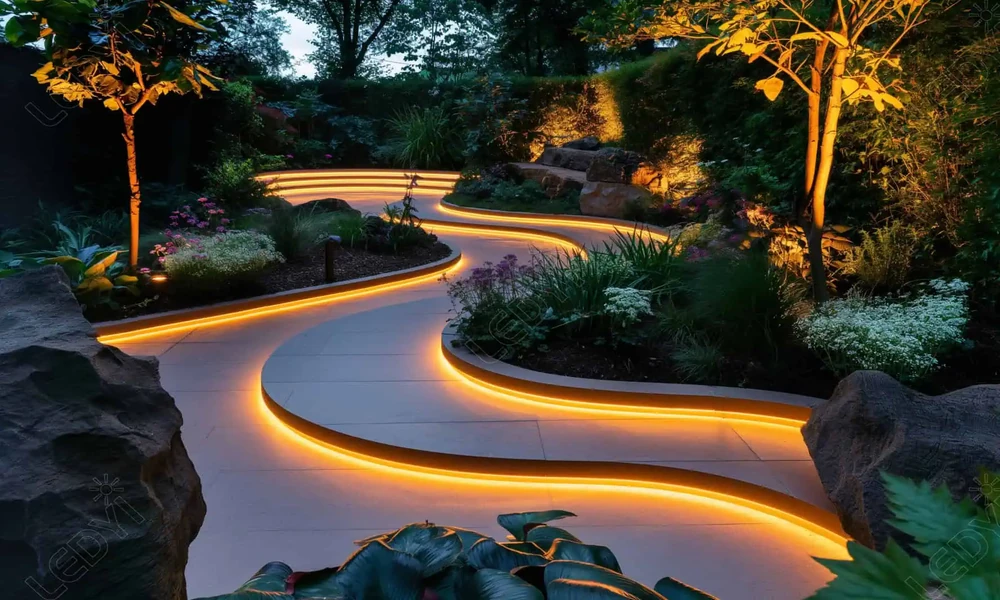
Landscape lighting in Dallas does more than illuminate a yard at night. Done well, it extends the usable hours of outdoor spaces, enhances curb appeal after dark, and adds a layer of security without looking institutional. Done poorly, it creates glare, washes out architectural detail, and ages quickly in the Texas heat.
Design Principles That Hold Up
Working with a dallas landscape lighting company that understands layered lighting – combining uplighting for trees, path lighting for walkways, and accent lighting for architectural features – produces results that look considered rather than assembled.
The best designs use restraint. Not every tree needs an uplight. Not every garden bed needs a path fixture. The goal is to create depth and interest, not to illuminate every square foot of the property.
Fixture Selection for Texas Conditions
The American Lighting Association notes that outdoor fixture ratings vary significantly by climate zone – what works in the Pacific Northwest may not hold up to Dallas summers, humidity, and occasional ice storms. Fixtures rated IP65 or higher are appropriate for most Dallas residential installations.
Brass and copper fixtures patina naturally and hold up well in Texas conditions. Low-grade aluminum fixtures may look similar at installation but corrode faster, particularly near irrigation zones.
Energy Efficiency and Controls
LED conversion has made landscape lighting significantly more efficient over the past decade. A well-designed LED system typically draws 75 to 80 percent less power than an equivalent halogen system. Paired with smart controls – timers, photocells, and zone controllers – the operating cost is modest relative to the impact.
When comparing bids, look at the total system wattage and the transformer capacity, not just the fixture count. A lower fixture count with better placement often outperforms a higher fixture count with mediocre design.

Femke Denis is a technology writer specializing in smart home innovation, automation systems, and connected devices. She focuses on how emerging technologies are transforming modern homes into more efficient, secure, and intelligent living spaces.
