
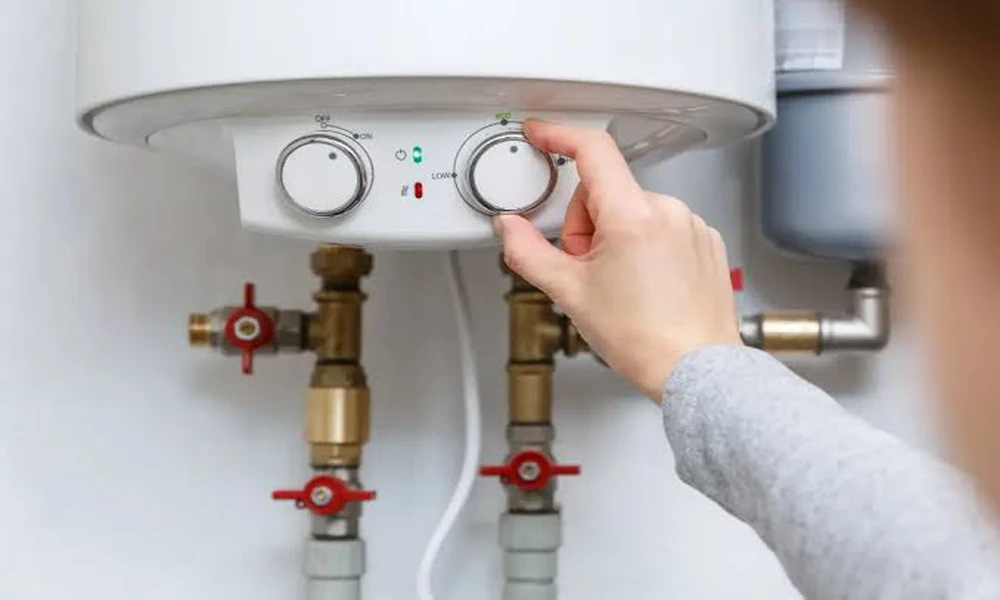
Boiler pressure problems are one of the most common reasons UK homes lose heating or hot water, and most of them come down to a leak, trapped air, or a faulty sensor rather than a serious mechanical failure. When pressure drops too low, the boiler can’t circulate water properly and will often lock out to protect itself, sometimes displaying a specific code such as an F9 boiler fault on Ideal models. Knowing what’s normal, what’s not, and when to call a Gas Safe engineer can save you an unnecessary callout or a cold house on a winter evening.
This guide walks through what boiler pressure actually is, the warning signs worth watching for, and how to safely bring pressure back to normal.
Correct boiler pressure usually sits between 1.0 and 1.5 bar when the heating is off. Pressure that’s too low often means a leak somewhere in the system, while pressure that’s too high can point to overfilling or a faulty expansion vessel. Most low-pressure issues can be fixed safely at home by topping up through the filling loop, following the manufacturer’s instructions.
What Is Boiler Pressure and Why It Matters
Boiler pressure refers to the water pressure inside a sealed central heating system, shown on a gauge or digital display on the boiler itself. This pressure keeps hot water circulating efficiently through radiators and pipework.
Too little pressure and the system can’t push water round properly, leading to cold radiators and heating faults. Too much pressure puts strain on seals, valves, and pipework, increasing the risk of leaks over time. Keeping pressure within the manufacturer’s recommended range protects both comfort and the lifespan of the boiler.
Common Signs of a Boiler Pressure Problem
Pressure issues rarely appear out of nowhere. Homeowners usually notice one or more of these signs first:
- Pressure gauge reading below 1 bar or above 2.5 bar
- Radiators that are cold at the top or fail to heat evenly
- Boiler displaying a fault or error code and refusing to fire
- Unusual noises such as gurgling or banging from the pipework
- Hot water working but central heating failing, or vice versa
Catching these signs early usually means a simple fix rather than a costly repair further down the line.
What Causes Boiler Pressure to Drop
Pressure loss almost always traces back to one of a small number of causes:
- A leak somewhere in the pipework, radiator valve, or boiler itself
- Recently bled radiators, which release a small amount of system water
- A faulty pressure relief valve letting water escape
- An ageing expansion vessel losing its charge
- A worn seal inside the boiler allowing gradual seepage
Sudden, dramatic pressure loss usually points to a leak, while slow pressure drift over weeks is often the expansion vessel or a minor seal issue. Ideal boiler low water pressure specifically tends to show up as an F1 code on Ideal models, prompting the boiler to lock out until the system is topped back up.
Boiler Pressure Sensor Problems
Every modern boiler relies on a pressure sensor to monitor the system and report readings to the control board. When that sensor becomes dirty, misaligned, or wired incorrectly, it can send false data even if the actual pressure in the system is fine.
Boiler pressure sensor problems are one of the more frustrating faults for homeowners, because the pressure gauge might look perfectly normal while the boiler still refuses to run. This is exactly the scenario behind many Ideal fault codes, where the boiler shuts down not because pressure is genuinely wrong, but because the sensor reporting it has developed a fault, often linked to debris on the sensor surface, a loose wiring connection, or an ageing circuit board.
Ideal Logic Boiler Faults
Ideal’s Logic range is one of the most widely installed boiler families in the UK, and it comes with its own consistent set of fault codes across models like the Logic Combi and Logic Max. Ideal Logic boiler faults typically fall into three categories: pressure-related, ignition-related, and sensor- or component-related.
Pressure faults are usually the easiest to resolve without a call out, since they often just need repressurising. Ignition faults, such as flame loss, and sensor faults involving the PCB usually need a qualified engineer, since they involve internal components that shouldn’t be opened by anyone without Gas Safe training.
How to Repressurise an Ideal Boiler
If your pressure gauge shows a low reading and there’s no visible leak, topping up the system is usually straightforward. Here’s the general process:
- Locate the filling loop, a flexible braided hose usually found under the boiler
- Make sure both ends of the loop are securely attached
- Slowly open both valves on the loop to let water flow into the system
- Watch the pressure gauge and stop once it reaches around 1.2 to 1.5 bar
- Close both valves firmly and disconnect the loop if it’s removable
- Reset the boiler if instructed by the display, then check the pressure holds
Always check your specific model’s manual first, since exact steps and pressure targets can vary slightly between boilers. If pressure drops again within a day or two, that points to a leak rather than a one-off top-up issue.
Common Ideal Boiler Error Codes
Recognising what a code means before calling an engineer can save time and help you describe the problem accurately.
| Code | Likely Meaning | Homeowner Action |
|---|---|---|
| F1 | Low water pressure | Repressurise using the filling loop |
| F2 | Flame loss or ignition fault | Reset once, then call an engineer if it repeats |
| F3 | Fan fault | Call a Gas Safe engineer |
| F9 | Water pressure sensor fault | Check pressure and leaks, then book an engineer if it persists |
| L2 | Flame loss lockout | Call a Gas Safe engineer |
Common Ideal boiler error codes almost always fall into either a pressure issue you can check yourself or a component fault requiring professional attention. When in doubt, a single safe reset is reasonable, but repeated faults should always go to a qualified engineer rather than being reset repeatedly.
When to Call a Professional
Certain situations should never be handled without a Gas Safe registered engineer. These include any fault involving the printed circuit board, repeated ignition failures, a strong gas smell, or pressure that keeps dropping despite topping up.
Attempting to open the boiler casing or work on internal components without proper training is both unsafe and likely to void your warranty. A professional visit is usually quick, and it protects both your safety and your appliance guarantee.
Frequently Asked Questions
What is normal boiler pressure?
Most domestic boilers should read between 1.0 and 1.5 bar when the heating is switched off, and the system is cold.
Why does my boiler keep losing pressure?
Repeated pressure loss almost always points to a leak somewhere in the system, or occasionally a failing expansion vessel or pressure relief valve.
Can I fix low boiler pressure myself?
Yes, in most cases. Topping up through the filling loop is a routine task, though the underlying cause should be checked if pressure keeps dropping.
Is it dangerous to run a boiler with low pressure?
The boiler will usually lock out on its own rather than run unsafely, but ignoring the fault can lead to heating failure and further wear over time.
What does an F9 fault mean on an Ideal boiler?
It usually points to a water pressure sensor issue, which can stem from a genuine pressure drop, a dirty sensor, or a wiring or PCB fault.
How often should a boiler be checked for pressure issues?
A quick visual check of the gauge every month is sensible, alongside a full annual service by a Gas Safe engineer.
Getting Your Boiler Back to Normal
Most boiler pressure problems are more of an inconvenience than an emergency, and understanding the basics helps you know when a quick top-up will solve it and when it’s time to bring in a professional. Persistent faults, sensor issues, or repeated lockouts are best left to a qualified engineer rather than repeated resets.
0800 Homefix supports homeowners across London and the South East with Gas Safe registered heating repairs, including specialist diagnosis of pressure and sensor faults on Ideal and other major boiler brands, backed by a 24/7 emergency response and no call-out fee.

Femke Denis is a technology writer specializing in smart home innovation, automation systems, and connected devices. She focuses on how emerging technologies are transforming modern homes into more efficient, secure, and intelligent living spaces.
