
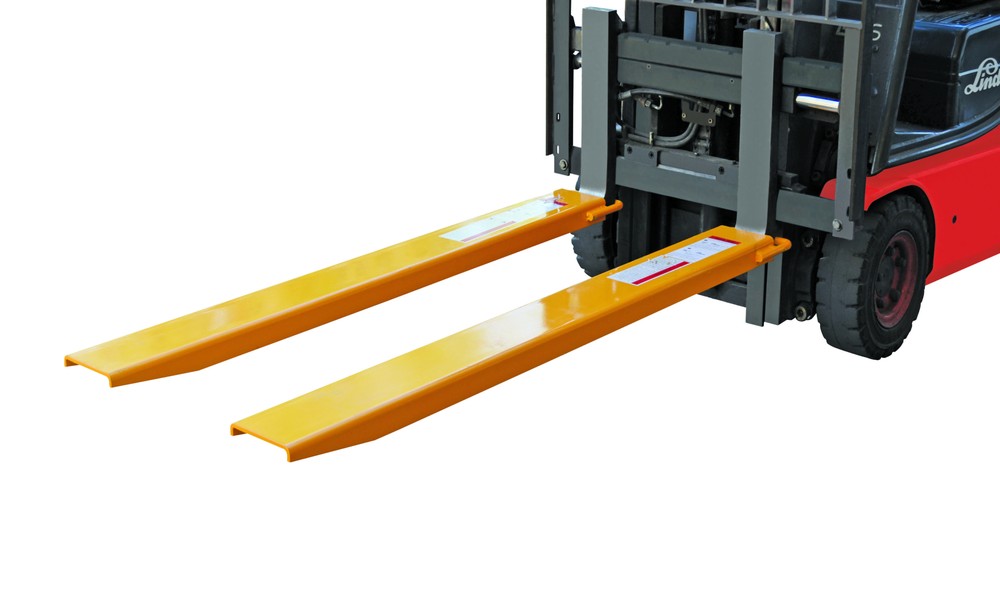
In terms of warehouse safety and efficiency, safe forklift attachments are essential. These include built up forklift slippers, which are more commonly utilised for carrying large or bulky loads, structural steel, pallets, and equipment that cannot be safely carried in an upright position by ordinary forks.
However, if you are deciding between enclosed or open bottom designs, the choice is more important than most operators understand. In heavy-duty environments heading into 2026, the wrong choice can impact load stability, jeopardize operator safety, and even hinder compliance.
Let’s break it down clearly.
What are Forklift Slippers?
Forklift slippers are sleeves that you put over the tines of your forklift to give you a wider, longer, or more stable lifting surface. They are often seen on construction sites, factories, and warehouses.
These are not the same as a forklift lifting jib, which is placed under a load to lift it. On the other hand, slippers are designed to support and distribute weight across forks.
Open-Bottom Forklift Slippers Explained
Open-bottom slippers are just as it sounds. The bottom isn’t completely covered and part of the fork can be seen too.
Key characteristics
- Lighter overall weight
- Easier to slide on and off
- Often cheaper upfront
Where They’re Commonly Used
This makes open-bottom service ramp designs appropriate for light-duty or temporary applications, including:
- Occasional oversized pallet handling
- Lightweight fabrication materials
- Short-term yard work
But they are very critical of fork condition and the right placement.
Enclosed Forklift Slippers Explained
These slippers entirely surround the forklift fork itself. This establishes a boxed shape and freezes the slipper of suggestions in place.
Key Characteristics
- Full-length enclosed sleeves
- Higher load stability
- Reduced movement during lifting
Where They Excel
Enclosed slippers are designed for:
- Heavy or uneven loads
- Repetitive lifting tasks
- High-risk warehouse environments
Enclosed designs are increasingly recommended by suppliers such as DHE Materials Handling Equipment as a starting point for new operational safety.
Side-by-Side Comparison
Here is how both options compare:
Enclosed Slippers are the Gold Standard for 2026
Warehouse safety expectations are tightening. Audits are stricter. Risk tolerance is lower.
Enclosed forklift slippers provide:
- Better weight distribution
- Reduced point loading on forks
- Less flex under heavy stress
Open-bottom designs, on the other hand, can twist or slide if the load is unbalanced or if the operator brakes hard.
If you have a forklift lifting jib that is already used for overhead work, that’s a good sign you are in the higher-risk category. A closed slipper fits with that type of safety regulation.
While Cost or Risk: The Actual Equation
Open-bottom slippers may seem like a less expensive option. But the savings can be wiped out quickly as replacement costs, downtime, and injury risk add up.
Enclosed slippers tend to:
- Last longer
- Reduce damage to forklift tines
- These help to reduce the potential for safety incidents
For facilities doing lifts on a daily basis, cost-per-use is heavily biassed towards enclosed designs.
Which One Should You Buy?
Choose open-bottom slippers only if:
- Loads are light
- Usage is infrequent
- Budget is extremely tight
Choose enclosed slippers if:
In 2026, an enclosed slipper is expected and no longer optional for most industrial sites.
Final Takeaway
This is not merely a product comparison. It’s a safety decision.
Low-risk environments do still use open-bottom forklift slippers, as there will always be some use for them. However, when it comes to serious loads on warehouse, construction yard, and manufacturing floors, enclosed slippers provide better structural integrity and control.
If safety, compliance, and longevity are to be considered, the answer is clear: enclosed forklift slippers are the way to go.
